AI API Aggregation Explained: Access Every Major Model Through One Endpoint
The Multi-Provider Problem
If you’re building anything with AI in 2026, you’re probably not using just one model.
Claude handles your long-document analysis. GPT powers your customer-facing chat. Gemini processes your image inputs. DeepSeek runs your cost-sensitive batch jobs. That’s four providers, four API keys, four billing dashboards, four SDKs with slightly different request formats, and four sets of rate limits to manage.
Most teams shipping AI features today are living this reality, and it’s tedious.
Each provider has its own authentication scheme. Anthropic uses x-api-key headers. OpenAI uses Bearer tokens. Google has its own auth flow entirely. When one provider goes down (and they all do, multiple times per year) your application fails unless you’ve already built custom fallback logic.
That’s the problem AI API aggregation solves.
How Aggregation Actually Works
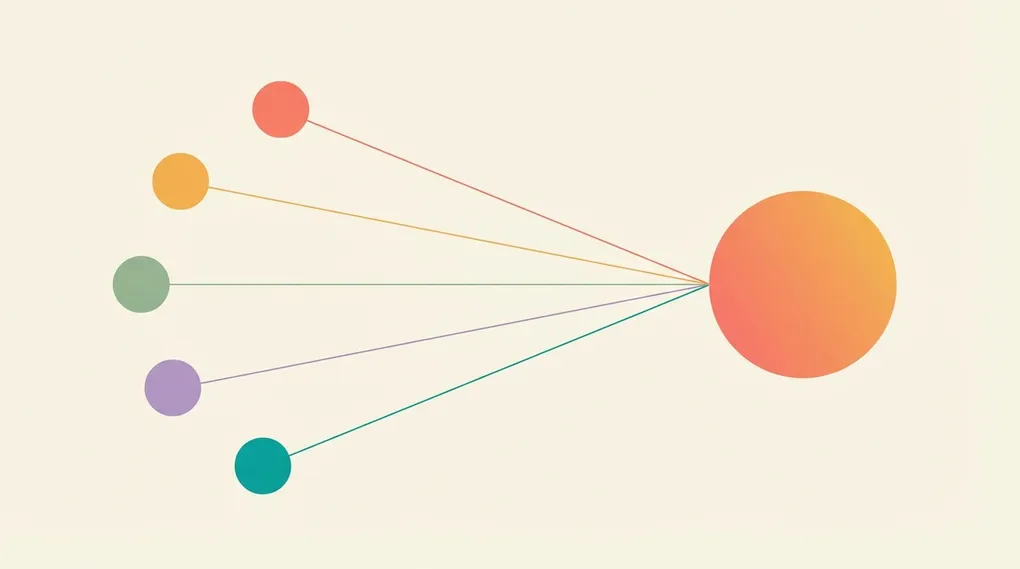
You send all requests to a single endpoint instead of calling each provider directly. The aggregation layer does four things:
First, it translates protocols. Your request arrives in OpenAI-compatible format. The aggregator converts it to whatever the target provider expects (Anthropic’s Messages API, Google’s Gemini format, etc.) and normalizes the response on the way back.
Second, it handles authentication. One API key on your side. The aggregator manages credentials for every upstream provider.
Third, it routes by model name. You specify claude-sonnet-4-6 or gpt-5.4 or gemini-3.1-pro, and the request goes to the right provider.
Fourth, it consolidates billing. One account, one invoice, one usage dashboard instead of reconciling spend across five different portals.
The practical upside: your code barely changes. If you’re already using the OpenAI SDK, switching to an aggregation platform usually means updating two environment variables: the base URL and the API key.
When Aggregation Makes Sense (And When It Doesn’t)
Not every project needs this. A weekend prototype that only calls GPT-5.4? Just use the OpenAI API directly.
But it starts paying for itself fast once you hit any of these situations:
The moment you add a second provider, you’re doubling your integration surface area. Three or four providers? The maintenance burden compounds quickly.
You also get model experimentation for free. Trying Claude for a task that’s been running on GPT is a one-line model name change. No SDK swap, no auth change, no response parsing update.
Failover is the one that sells it to engineering managers. In January 2026, OpenAI had a 4-hour outage that hit thousands of production apps. Teams with aggregation layers rerouted traffic to Claude or Gemini during the downtime. Teams without scrambled to ship emergency code changes.
If you’re in a region where some providers are restricted or throttled, aggregation platforms with global infrastructure give you consistent access from anywhere.
And there’s the cost visibility angle. When spend is split across providers, answering “how much are we spending on AI per customer?” requires pulling data from four dashboards. A single billing account makes that trivial.
Where it doesn’t make sense: if you depend on provider-specific features the aggregation layer doesn’t expose (like Anthropic’s computer use API or OpenAI’s Realtime API), or if compliance rules forbid your data touching intermediary infrastructure.
What Separates Good Aggregation From Bad
There’s a wide quality gap between aggregation platforms. Here’s what to look for:
Full OpenAI Compatibility
The aggregation layer should support the full OpenAI API surface: chat completions, streaming, function calling/tool use, embeddings, image generation, and the newer Responses API. If it only covers basic chat completions, you’ll hit walls quickly.
Ofox, for example, exposes /v1/chat/completions, /v1/responses, /v1/embeddings, and /v1/images/generations — all through the standard OpenAI format. You can use the official OpenAI SDK in Python, Node.js, or any language, just pointed at a different base URL.
Broad Model Coverage
You want access to the full range. A good platform offers models from OpenAI, Anthropic, Google, Meta (Llama), Mistral, and Chinese providers like DeepSeek and Qwen. Here’s a snapshot of what matters in 2026:
| Provider | Key Models | Why You’d Use Them |
|---|---|---|
| OpenAI | GPT-5.4, GPT-5.4 Mini, GPT-5.3 Codex | General-purpose, coding, cost tiers |
| Anthropic | Claude Opus 4.6, Claude Sonnet 4.6 | Long context, document analysis, safety |
| Gemini 3.1 Pro, Gemini 3.1 Flash | Multimodal, large context window, price | |
| Alibaba | Qwen 3.5 (397B, 122B, Flash) | Cost-efficient, multilingual |
| MiniMax | M2.7, M2.7 Highspeed | Price-performance ratio |
| DeepSeek | DeepSeek R1, DeepSeek V3 | Reasoning, open-weight |
Transparent Pricing
Good platforms charge per-token at rates competitive with going direct. Some are cheaper because they negotiate volume pricing with providers. Avoid platforms with hidden markups, monthly minimums, or opaque “credit” systems where you can’t figure out what a request actually costs.
Published per-token pricing you can verify against each provider’s official rates is the bar. If a platform won’t show you the numbers, that’s a red flag.
Low Routing Overhead
The aggregation layer sits between you and the model. That’s an extra network hop. Good platforms keep this under 20ms, which is negligible when model inference takes 500ms to several seconds. Bad ones add hundreds of milliseconds or spike unpredictably.
Native Protocol Support
While OpenAI compatibility covers most use cases, sometimes you want to use Anthropic’s native API format (for features like extended thinking) or Google’s native format. The best aggregators offer native protocol endpoints alongside the unified one, so you’re never boxed in.
Ofox handles this with three endpoints: api.ofox.ai/v1 for OpenAI format, api.ofox.ai/anthropic for native Anthropic, and api.ofox.ai/gemini for native Google. Same API key works across all three.
Where This Actually Shows Up
Model A/B Testing
You want to know whether Claude or GPT handles your summarization task better. Without aggregation, that means two integrations and custom routing logic. With it, you change the model name in your config. Same input format, same output format, same billing. Run both for a week and compare.
Cost-Tier Routing
Not every request needs your most expensive model. Customer-facing chat might warrant GPT-5.4, but internal log summarization works fine with Qwen 3.5 Flash at a fraction of the cost. Aggregation lets you build tiered routing without managing multiple SDKs.
Regional Access
Your app serves users globally, but some providers have geographic restrictions. An aggregation platform with global infrastructure gives you consistent access from any region through one integration point.
Failover
OpenAI returns 500s for two hours. Your aggregation layer detects this and routes to Claude automatically. Users never notice. Major providers had outages in 2025 and early 2026; teams behind aggregation layers rode them out without shipping emergency patches.
Developer Onboarding
New engineer joins. Instead of setting up accounts with four providers, they get one API key and start building. Less friction, faster ramp-up.
What to Watch Out For
Aggregation isn’t magic. A few things to keep in mind:
Feature lag is the biggest one. When a provider ships a new model or API parameter, the aggregation layer needs to support it. Good platforms add new models within days. Slower ones take weeks, which can block you if you’re trying to adopt something quickly.
Your requests also pass through the aggregator’s infrastructure, so understand where that infrastructure lives and what data retention policies apply.
Vendor lock-in is actually low here. Since most aggregators speak OpenAI SDK format, switching platforms or reverting to direct provider access is a small change. That said, check what proprietary features the platform adds on top, because those won’t be portable.
Rate limits are worth verifying. The aggregator may impose its own limits on top of the provider’s. Ofox allows 200 requests per minute per key with unlimited token throughput, which covers most workloads. Other platforms may be more restrictive.
So Should You Use One?
If you’re calling one model from one provider, no. Direct access is simpler.
If you’re calling two or more, the math changes fast. Managing multiple SDKs, auth schemes, and billing accounts is work that doesn’t ship features. An aggregation layer removes that work.
Ofox is one option worth looking at: point the OpenAI SDK at api.ofox.ai/v1, swap in your Ofox API key, and you get access to GPT, Claude, Gemini, Qwen, DeepSeek, and dozens more through the same interface. Native Anthropic and Gemini endpoints are there too if you need them.
Most teams I’ve seen adopt aggregation don’t do it proactively. They do it after the third time someone asks “wait, which API key goes where?” or after a provider outage takes down a production feature. Might as well skip to the end.