Gemini 3.7 Flash API: $0.75 Pricing, minimal Returns 400
Gemini 3.7 Flash bills $0.75 in / $3.75 out, same as 3.6 Flash. reasoning_effort minimal now returns 400, and the cheapest legal tier costs 8.4x more.
 Ofox
Ofox 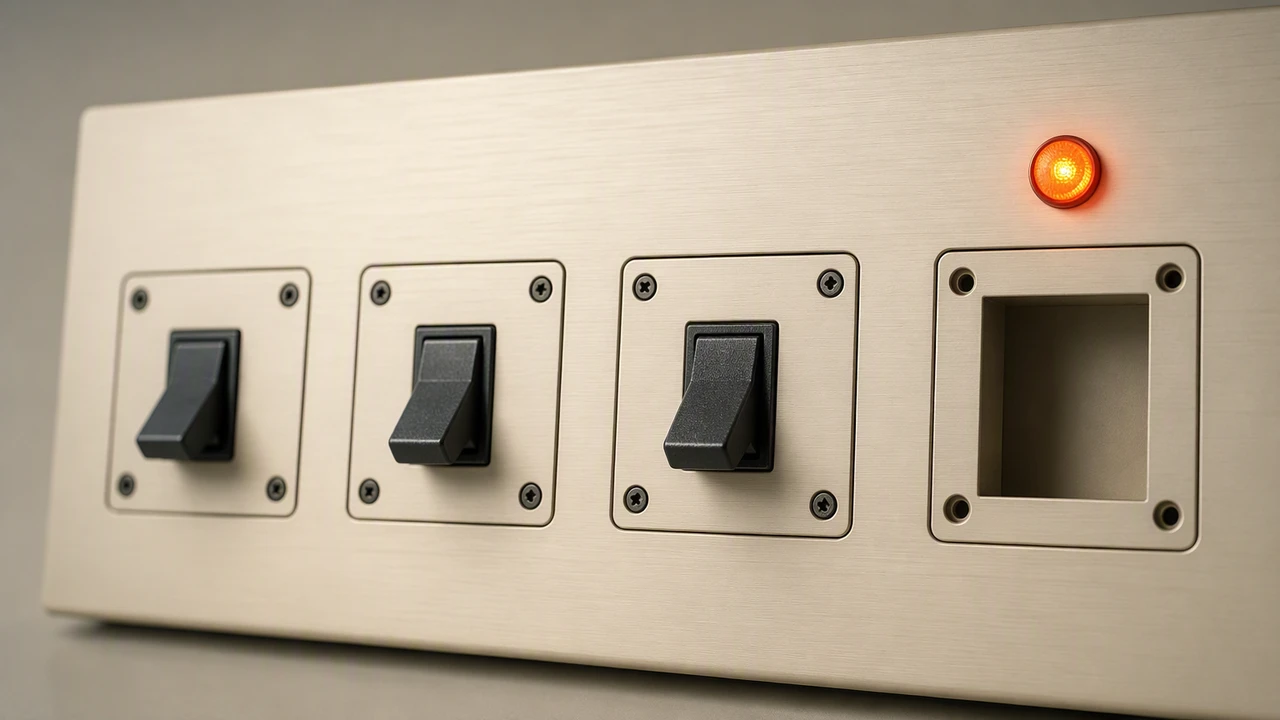
Gemini 3.7 Flash shipped on 2026-08-13 at $0.75 per million input tokens and $3.75 per million output. Two things about that price are easy to miss: it expires on 2026-12-31 and doubles the next day, and Gemini 3.6 Flash now carries the exact same numbers.
The thing that breaks builds is elsewhere. The thinking tiers went from four to three. minimal is gone, and it does not degrade quietly.
Price:        $0.75 in / $3.75 out per 1M through 2026-12-31
              $1.50 / $7.50 from 2027-01-01
              Batch and Flex: $0.375 / $1.875, same doubling
Cache:        $0.075 read, $0.50 per 1M per hour storage
Context:      1,048,576 in / 65,536 out
Thinking:     thinking_level low | medium | high, default medium
              minimal returns HTTP 400
Gateways:     google/gemini-3.7-flash on ofox
Measured:     minimal 400, none and xhigh accepted and billed
Snapshot:     2026-08-21, 10 streamed calls per tier
Last updated 2026-08-21. Introductory pricing expires 2026-12-31, so re-check before budgeting past that date.
How Much Does the Gemini 3.7 Flash API Cost?
$0.75 in, $3.75 out, until it isn’t. Google’s pricing page puts two rates in a single cell, which is how the wrong one ends up in a budget spreadsheet.
| Tier | Input / 1M | Output / 1M | In effect |
|---|---|---|---|
| Standard | $0.75 | $3.75 | through 2026-12-31 |
| Standard | $1.50 | $7.50 | from 2027-01-01 |
| Batch / Flex | $0.375 | $1.875 | through 2026-12-31 |
| Batch / Flex | $0.75 | $3.75 | from 2027-01-01 |
Context caching reads at $0.075 per million with storage at $0.50 per million tokens per hour, both doubling on the same date. Search grounding gives 5,000 free requests a month shared across every Gemini 3.x model, not per model, and then costs $14 per 1,000.
One line on that page decides more of your bill than the headline rate: the output row reads “Output price (including thinking tokens)”. Reasoning is metered at the output rate, so the effort setting is a price multiplier, not a quality knob with a rounding error attached.
Is Gemini 3.7 Flash Cheaper Than Gemini 3.6 Flash?
No. They cost exactly the same, cell for cell. If you saw 3.7 Flash introduced as half the price of 3.6 Flash, that comparison had a shelf life of about one day, and the pricing page’s own history shows why.
- 2026-07-22, just after 3.6 Flash shipped on 2026-07-21, per the archived pricing page: 3.6 Flash costs $1.50 / $7.50.
- 2026-08-12, per the last copy before 3.7 launched: 3.6 Flash still costs $1.50 / $7.50, flat, with no discount row. 3.7 Flash is not on the page yet.
- 2026-08-13: 3.7 Flash ships.
- 2026-08-14, per the next archived copy: 3.6 Flash and 3.7 Flash both read $0.75 / $3.75 through 2026-12-31, $1.50 / $7.50 after.
- 2027-01-01: both return to $1.50 / $7.50, which is what 3.6 Flash cost on its own launch day.
So the baseline moved inside the same 48 hours as the comparison. Google’s model card footnotes the end state without comment: the asterisk on both price rows says the introductory price expires December 31, 2026. Upgrading from 3.6 costs nothing and saves nothing. What the discount buys is four and a half months, on both models equally.
The ofox model page carries rates Google’s page does not itemise: cache write at $0.0415 per million, one-hour cache write at $0.50, audio input at $0.75, web search at $0.014 per request.
How Do I Call Gemini 3.7 Flash?
Two routes, and the only differences are the base URL and the model string.
from openai import OpenAI

client = OpenAI(api_key="sk-...", base_url="https://api.ofox.ai/v1")

r = client.chat.completions.create(
    model="google/gemini-3.7-flash",
    reasoning_effort="low",
    messages=[{"role": "user", "content": "Rewrite this query with a window function"}],
)
print(r.choices[0].message.content)
Straight to Google, the model string loses its google/ prefix and the base URL changes:
client = OpenAI(
    api_key="AIza...",
    base_url="https://generativelanguage.googleapis.com/v1beta/openai/",
)
r = client.chat.completions.create(model="gemini-3.7-flash", reasoning_effort="low", messages=[...])
On Google’s native protocol the parameter is not reasoning_effort. It is thinking_level, it takes low, medium and high, and it defaults to medium. Both protocols are open on ofox, with Google and Cloud Vertex as the upstreams.
Capabilities are worth copying off the model page rather than discovering by 400: function calling, structured outputs, context caching, code execution, search grounding, URL context, file search and Maps grounding are all supported, computer use is marked Preview, and Batch, Flex and Priority are all available. Live API, image generation and audio generation are not supported. Input takes text, image, video, audio and PDF; output is text only.
Why Does minimal Return an Error on Gemini 3.7 Flash?
Because the tier was removed, and the request fails instead of falling back. The model page spells it out under Thinking: Supported (low, medium, high) followed by Note: minimal is not supported and returns an error.
We sent it anyway. Over the ofox route, reasoning_effort: "minimal" returns HTTP 400 with:
{"error": {"code": null,
           "message": "Thinking level is unsupported: THINKING_LEVEL_MINIMAL",
           "param": null, "type": "invalid_request_error"}}
3.6 Flash still accepts minimal, and we measured what that tier was doing for you before you lose it. On 3.6 Flash, the same prompt at minimal returned a median of 42 completion tokens with zero reasoning tokens and a 1.36-second first token. The cheapest tier 3.7 will accept, low, returned a median of 354 tokens at 4.19 seconds. That is 8.4x the billed output and 3x the wait, for a model whose visible answer is the same 40 tokens either way.
So the migration is not “change the model ID and keep going”. A config that hardcodes minimal stops working at the moment you swap the ID, and the nearest legal value silently costs eight times as much. There is no zero-thinking setting on 3.7 Flash to fall back to.
The more interesting half of that probe is what does not fail. none and xhigh are not documented values for this model, and both returned HTTP 200 with reasoning tokens on the bill: reasoning-token medians of 271 and 604 across ten runs each, which is the 308 and 637 completion tokens in the table below. Only minimal is rejected. A 200 is not confirmation that the value you sent selected the tier its name implies, which is the same trap GLM 5.3 sets with undocumented reasoning_effort values, where validation lives on the route rather than in the model. Probe your own route before shipping, because “it returned 200” and “it did what I asked” are different claims.
Google’s OpenAI compatibility page makes this worth two minutes of your time: its reasoning_effort mapping table lists Gemini 3.1 Pro, 3.1 Flash-Lite, Gemini 3 Flash and 2.5, with no 3.7 column, and it maps OpenAI’s minimal downward. The model page says 3.7 rejects minimal. Two Google pages, no agreement, and one short probe settles it for the route you actually call.
What Does Each Thinking Level Actually Cost?
The same answer, at up to double the bill. Mak, product lead at ofox, ran 10 streamed calls per tier through the same ofox route on 2026-08-21, one short prompt (rewrite a GROUP BY as a window function), recording time to the first content token and the usage the API reported.
reasoning_effort | TTFT median | TTFT range | Completion tokens | Range | Visible answer |
|---|---|---|---|---|---|
low | 4.19 s | 2.22–5.40 | 354 | 40–418 | ~41 |
medium | 5.47 s | 4.47–6.98 | 384 | 291–558 | ~41 |
high | 7.69 s | 5.97–9.68 | 688 | 560–806 | ~40 |
| unset | 5.58 s | 4.32–5.98 | 431 | 333–583 | ~36 |
none (undocumented) | 4.64 s | 1.88–5.05 | 308 | 40–361 | ~40 |
xhigh (undocumented) | 7.35 s | 5.89–9.10 | 637 | 513–892 | ~39 |
Medians of 10 runs; the ranges are observed minimum to maximum, which widen as you add runs, so read them as spread rather than as bounds. All of it is one prompt on one route, and parameter handling can differ between routes to the same model, so treat the shape as portable and the numbers as ours.
The answer never changes size. The invisible part does. Text tokens sat near 40 at every tier, because the SQL statement the model was asked for is 40 tokens long no matter how long it thinks about it. Everything above that line is reasoning, billed at the output rate. On output alone at $3.75 per million, 1,000 of these calls cost $1.33 at low and $2.58 at high; the 34-token prompt adds under three cents per thousand either way, so the effort setting is doing essentially all of the work in that spread.
low bottomed out at 40 completion tokens on one of its ten runs, with the reasoning count at exactly zero; none did the same twice. Neither medium nor high ever did, and that floor is most of why their ranges sit apart.
low and high separate cleanly. low and medium do not. The high range (560–806) does not overlap the low range (40–418), so that gap is real on this prompt. low and medium are 30 tokens apart at the median with ranges that overlap across most of their span, which means ten runs cannot tell them apart here. Whether medium is a useful midpoint is a question about your prompt, and it takes about four minutes to answer with your own.
Undocumented values do not fail, and they do not do what they say. none returned HTTP 200 and spent a median of 271 reasoning tokens, which is most of what low spends. If you read that name as an off switch, you are paying for thinking you believe you disabled. xhigh lands next to high. Only minimal is rejected.
None of this contradicts the model being fast. Artificial Analysis ranks 3.7 Flash 1st of 182 on output speed at 389.5 tokens per second. On the same page they measure 14.52 seconds to first token at high on Google’s own API, against a 2.80-second median for its price peers, and roughly double the median we saw at high on this route. The wait sits in front of the stream rather than inside it, which is why the effort setting, not the tokens per second, is what a user feels.
What Is Gemini 3.7 Flash Good At?
Google’s model card publishes a comparison table against 3.6 Flash, Claude Sonnet 5, GPT-5.6 Terra and Muse Spark 1.2. The rows where the gaps are real:
| Benchmark | 3.7 Flash | 3.6 Flash | Sonnet 5 | GPT-5.6 Terra |
|---|---|---|---|---|
| AA Intelligence Index | 56 | 52 | 55 | 57 |
| GDM-MRCR v2 (128k) | 97.0% | 91.8% | 81.5% | 93.5% |
| LVBench (long video) | 85.4% | 84.2% | 68.5% | 78.9% |
| Code Arena (web dev Elo) | 1588 | 1538 | 1541 | 1523 |
| AutomationBench | 30.4% | 17.0% | 10.7% | 23.6% |
| FrontierCode 1.1 | 43.6% | 34.4% | 42.7% | 41.3% |
| HLE-Verified | 53.6% | 51.2% | 31.0% | 51.1% |
| DeepSWE v1.1 | 65.3% | 48.6% | 53.8% | 69.6% |
| Terminal-bench 2.1 | 85.8% | 78.0% | 80.4% | 87.4% |
| Terminal-bench 3.0 | 14.9% | 5.4% | 14.6% | 20.8% |
| GDPVal-AA v2 (Elo) | 1525 | 1422 | 1598 | 1578 |
| Agent’s Last Exam | 26.3% | 24.2% | 33.3% | 28.0% |
| CharXiv, no tools | 84.5% | 85.2% | 77.0% | 85.9% |
The strengths cluster: long-context retrieval, video, front-end code and browser automation. 97.0% on 128k needle retrieval is the only score above 95 in the table, and AutomationBench at 30.4% against Sonnet 5’s 10.7% is not a margin you get from a better prompt.
The weaknesses cluster just as tightly, on work that runs long. It sits behind GPT-5.6 Terra on both Terminal-bench versions, 85.8% against 87.4% on 2.1 and 14.9% against 20.8% on 3.0, DeepSWE v1.1 lands 4.3 points behind Terra as well, and GDPVal-AA v2’s 1525 is last in the table. Pick this model for a step, not for an eight-hour unattended loop.
Two things to read carefully in that table. CharXiv is the one row where 3.7 is worse than the model it replaces, 84.5% against 85.2% without tools and 88.7% against 89.4% with them, so chart-heavy multimodal work deserves your own A/B before the swap. And the Terminal-bench rows are vendor-run. The card claims 85.8% on Terminal-bench 2.1, which sits above the 83.8% ± 1.2% held by the top entry on the public Terminal-Bench 2.1 board, 17 verified submissions when we last pulled it and none of them 3.7 Flash. A self-reported score that clears the verified leader is the one number in this table to read as a claim rather than a result.
Two more lines from the card, in Google’s own words: the knowledge cutoff is March 2026 with some domains still capped at January 2025, and there “may also be occasional slowness or timeout issues.”
When Should You Pick Gemini 3.7 Flash?
| Workload | Call | Why |
|---|---|---|
| RAG and retrieval past 128k | Pick it | MRCR v2 at 97.0%, highest in the card |
| Video understanding and QA | Pick it | LVBench 85.4%, 17 points over Sonnet 5 |
| Front-end and web code generation | Pick it | Code Arena 1588, top of the table |
| Browser and GUI automation | Pick it | AutomationBench 30.4% vs Sonnet 5’s 10.7% |
| Long-horizon terminal agents | Careful | Terminal-bench 3.0 at 14.9% |
| Interactive chat and voice front-ends | Look elsewhere | No Live API, and thinking time precedes the first token |
| Chart-dense multimodal analysis | Test first | CharXiv is the one regression against 3.6 |
| Single responses over 64k tokens | Chunk it | Output ceiling is 65,536 |
If your workload is not on that list, ofox’s model finder ranks 100+ models by quality, cost and speed for a chosen task type (coding, agents, long-document RAG, vision, extraction, translation), pulling live prices and context limits. No signup, no key.
Which Models Score About the Same?
Four models sit inside three points of each other on the Artificial Analysis Intelligence Index, at prices that differ by more than 3x. Scores and rates below are the ones printed in Google’s model card, which is one source rather than four, so re-check a vendor’s page before you commit a budget to it.
| Model | AA Index | Input / 1M | Output / 1M |
|---|---|---|---|
| GPT-5.6 Terra | 57 | $2.00 | $12.00 |
| Muse Spark 1.2 | 57 | $1.25 | $4.25 |
| Gemini 3.7 Flash | 56 | $0.75 | $3.75 |
| Claude Sonnet 5 | 55 | $2.00 | $10.00 |
| Gemini 3.6 Flash | 52 | $0.75 | $3.75 |
Cheapest of the four on output, 3.2x below Terra, one point behind it on the composite. The catch is the composite: it hides the terminal and GDPVal rows where 3.7 Flash finishes last, so treat “comparable” as a statement about the index and nothing else.
One row down, 3.6 Flash is now the same price for four fewer points, which leaves it with no case except prompts you have already tuned against its behaviour. Our 3.6 Flash cost comparison against DeepSeek V4 Flash has the per-task math if you are still on it, and the 3.1 Flash-Lite budget agent comparison covers the tier below. Coming from two generations back, the 3.5 Flash coding agent guide still applies to 3.7 unchanged except for the model ID and the missing minimal. One generation up, Gemini 3.8 Flash vs DeepSeek V4 Flash shows what the 2 September release buys at the same price: 59 points at high effort, but roughly 30% more output tokens per task than 3.7 Flash.
ofox puts google/gemini-3.7-flash and google/gemini-3.6-flash behind one OpenAI-compatible endpoint, which makes the A/B in the snippet above a one-string change.
The pricing index tracks where each vendor’s current rate lives, and the six things that change it.
References
- Google: Gemini 3.7 Flash model page
- Google: Gemini API pricing
- Google: thinking and thinking_level
- Google: OpenAI compatibility
- DeepMind: Gemini 3.7 Flash model card
- Artificial Analysis: Gemini 3.7 Flash
- Terminal-Bench 2.1 leaderboard
- Internet Archive: Gemini API pricing, 2026-07-22
- Internet Archive: Gemini API pricing, 2026-08-12
- Internet Archive: Gemini API pricing, 2026-08-14
- ofox model page: Gemini 3.7 Flash
Frequently Asked Questions
- How much does the Gemini 3.7 Flash API cost?
- $0.75 per million input tokens and $3.75 per million output through December 31, 2026, then $1.50 and $7.50 from January 1, 2027. Google's pricing page prints both rows in the same cell. Batch and Flex are half that at $0.375 / $1.875, doubling on the same date. Output price includes thinking tokens, so reasoning is billed at the output rate.
- Is Gemini 3.7 Flash cheaper than Gemini 3.6 Flash?
- No, they are identically priced. Google's pricing page carries the same four tiers and the same two dates for both models. Archived copies of that page show why the half-price framing does not survive contact with it: on 2026-08-12 3.6 Flash was $1.50 / $7.50 flat and 3.7 Flash was not listed, and by 2026-08-14 both read $0.75 / $3.75 through 2026-12-31. The baseline was cut inside the same 48 hours as the comparison.
- Why does reasoning_effort minimal fail on Gemini 3.7 Flash?
- Because 3.7 Flash dropped that tier. The model page states 'Note: minimal is not supported and returns an error.' In our probe the request came back HTTP 400 with 'Thinking level is unsupported: THINKING_LEVEL_MINIMAL' as an invalid_request_error. 3.6 Flash accepts minimal, so any config that hardcodes it breaks on the model ID swap rather than degrading quietly.
- What are the thinking levels on Gemini 3.7 Flash?
- The native parameter is thinking_level and it takes low, medium and high, defaulting to medium. Through the OpenAI-compatible layer the parameter is reasoning_effort. We measured 10 streamed calls per tier on one short prompt: low returned a median of 354 completion tokens against 688 at high, with no overlap between the two ranges, while the visible answer stayed around 40 tokens at every tier.
- What is the context and output limit on Gemini 3.7 Flash?
- 1,048,576 input tokens and 65,536 output tokens. The million-token window does not mean million-token responses, so long-document rewrites and whole-repo generation still need chunking. Inputs accept text, image, video, audio and PDF; output is text only.
- Is Gemini 3.7 Flash fast?
- Both, depending on which half you measure. Artificial Analysis ranks it 1 of 182 on output speed at 389.5 tokens per second, and on the same page measures 14.52 seconds to first token at high on Google's API against a 2.80-second median for its price peers. First-token latency is a different story from throughput, because thinking time lands in front of the first token: our medians on one short prompt were 4.19 seconds at low, 5.47 at medium and 7.69 at high. A model named Flash can still make a user wait if the effort setting is high.
- Which models score about the same as Gemini 3.7 Flash?
- On the Artificial Analysis Intelligence Index printed in Google's model card, 3.7 Flash scores 56 against 57 for GPT-5.6 Terra and Muse Spark 1.2 and 55 for Claude Sonnet 5. The same card lists them at $2.00 / $12.00, $1.25 / $4.25 and $2.00 / $10.00 per million tokens, so 3.7 Flash is the cheapest of the four by output price.
- What is the Gemini 3.7 Flash model ID on gateways?
- google/gemini-3.7-flash on ofox, over either the OpenAI /v1/chat/completions protocol or Google's native Gemini protocol. Calling Google directly the code is gemini-3.7-flash, and the OpenAI-compatible base URL is https://generativelanguage.googleapis.com/v1beta/openai/.