Gemini 4 vs Claude vs GPT: Which Models Compete at Each Tier?
Every Gemini 4 model matched to its Claude and GPT counterpart, with official prices, context, default reasoning, Artificial Analysis cost per task, hallucination rates, free tiers and Ofox availability.
 Ofox
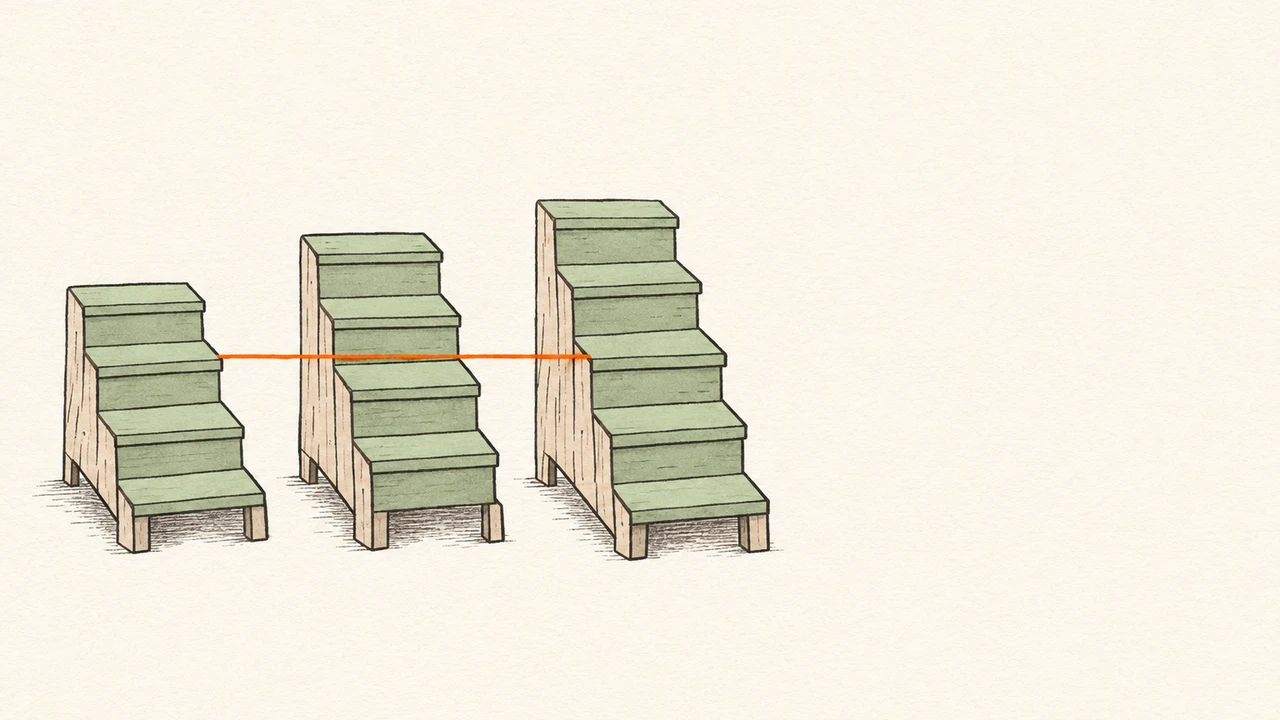
Gemini 4 Carbon competes with Claude Fable 5.2 and GPT-6.2 Astra at the top. Gemini 4 Neon lines up with Claude Opus 5.5 and GPT-6.2 Sol. Gemini 4 Hydrogen sits against Claude Sonnet 5.5 and GPT-6.1 Terra. Google’s budget counterpart to Claude Haiku 5.5 and GPT-6 Luna is Gemini 3.5 Flash-Lite, not Hydrogen. Gemini 4 Argon has the same price as Carbon and has dropped out of Google’s model selection guide, so treat it as the legacy option. Google set two of those pairings itself in its model cards. We set the other two from price and positioning, and each one is labelled below.
At each model’s default reasoning setting, one pattern holds in the three upper tiers. The Gemini model has the lowest hallucination rate of its group, by a wide margin, on Artificial Analysis’s AA-Omniscience test. In the Neon and Hydrogen tiers it also has the highest Intelligence Index score at default, but it usually costs more per finished task than the OpenAI model, because Gemini defaults spend more thinking tokens.
This page is the map for our Gemini 4 comparison series. Every number in it comes from one of the full head-to-head articles linked below, or from the same Artificial Analysis (AA) data those articles use, fetched on November 19, 2026. Ofox publishes this page, and most of the models in it can be called through Ofox. Gemini 4 Carbon and Gemini 4 Neon cannot. We ran no new tests for this page. Results described as “our run” come from the sibling articles, which say what was measured and how.
How the tiers line up, and who decided each pairing
| Tier | Anthropic | OpenAI | Who set the pairing | |
|---|---|---|---|---|
| Hardest work | Gemini 4 Carbon | Claude Fable 5.2 | GPT-6.2 Astra | Our inference. Google’s Carbon card compared Carbon with GPT-6 Astra, Claude Opus 5.5 and Claude Fable 5.1. Fable 5.2 (Nov 9) and GPT-6.2 Astra (Nov 17) are the current versions of those lines, and both list at $8/$40 |
| Upper-mid, high-frequency complex work | Gemini 4 Neon | Claude Opus 5.5 | GPT-6.2 Sol | Google. The Neon model card compares exactly these three |
| Everyday coding and agents | Gemini 4 Hydrogen | Claude Sonnet 5.5 | GPT-6.1 Terra | Google. The Hydrogen model card compares exactly these three |
| High-volume budget | Gemini 3.5 Flash-Lite | Claude Haiku 5.5 | GPT-6 Luna | Our inference from price and from each vendor’s own positioning. Google’s Hydrogen guide says to keep 3.5 Flash-Lite “for high-volume classification, routing, and sub-second latency targets.” Anthropic describes Haiku 5.5 as built “for high-volume, latency-sensitive tasks such as classification, extraction, and routing” |
| Legacy | Gemini 4 Argon | — | — | Google’s choosing-a-model page now covers Carbon, Neon and Hydrogen only. Argon is still served, with no shutdown date |
Two details matter when you read this map.
Opus 5.5 appears on two Google cards. Google’s Carbon card (results “as of October 2026”) and its Neon card (November) both include Opus 5.5. From December 1, Carbon’s list price is the same as Opus 5.5’s ($4/$20). We put Opus in the Neon tier because that is the comparison Google built Neon around, and because Anthropic’s own lineup puts Fable 5.2 above Opus. If your budget is the Opus price, compare it with both Carbon and Neon.
Hydrogen is not a budget model. It is Google’s default general-purpose model. At $1.50/$7.50 per million tokens it costs 15 times the short-prompt rates of Haiku 5.5 and Luna. The Hydrogen vs Haiku 5.5 vs Luna comparison shows what that premium does and does not buy.
Old benchmark tables are the other trap. A column labelled “GPT-6 Astra” or “Fable 5.1” does not describe GPT-6.2 Astra or Fable 5.2. The head-to-head articles keep every source’s version label exactly as printed.
The master table
All prices are the vendor’s own Standard list rates in USD per million tokens, input then output, checked November 19, 2026. Output includes thinking tokens for every model here. AA figures are at the reasoning level named in the “Reasoning level for AA columns” column. For every model except two, that is the vendor’s documented API default. OpenAI documents no default for GPT-6.2 Astra or Sol, so for those two we show AA’s medium results and say so in the row. The model’s AA score at its highest setting is in brackets. AA computes cost per task from the tokens each model used on its Intelligence Index v5.0.1 and that model’s list price. Hallucination rate is AA-Omniscience: incorrect answers as a share of all non-correct responses, so lower is better.
| Model | Price in / out | Context | Reasoning level for AA columns | AA index at that level (top) | AA cost per task at that level | Hallucination at that level | Free API tier | On Ofox (Nov 19) |
|---|---|---|---|---|---|---|---|---|
| Gemini 4 Carbon | $2 / $10 through Nov 30; $4 / $20 from Dec 1 | 1,048,576 shared | medium | 58.3 (60.0) | $6.59 at Dec rates (≈$3.29 at Nov rates) | 4.2% | No | No |
| Claude Fable 5.2 | $8 / $40 | 1M | high | 61.8 (64.6) | $9.08 | 58.0% | No | Yes |
| GPT-6.2 Astra | $8 / $40; higher above 272K input | 1,050,000 (922K input) | medium (OpenAI documents no default)¹ | 57.0 (62.1) | $1.62 | 54.1% | No | Yes |
| Gemini 4 Neon | $3 / $15 | 1,048,576 shared | high | 59.6 (61.4) | $3.74 | 13.9% | No | No |
| Claude Opus 5.5 | $4 / $20 | 1M | medium | 48.2 (59.1) | $2.45 | 66.9% | No | Yes |
| GPT-6.2 Sol | $2 / $10; higher above 272K input | 1,050,000 (922K input) | medium (OpenAI documents no default)¹ | 52.7 (57.3) | $0.41 | 61.1% | No | Yes |
| Gemini 4 Hydrogen | $1.50 / $7.50 | 1,048,576 shared | high | 50.8 (53.9) | $1.87 | 8.7% | Yes | Yes |
| Claude Sonnet 5.5 | $2 / $10 | 1M | high | 41.5 (54.5) | $1.64 | 63.6% | No | Yes |
| GPT-6.1 Terra | $1 / $5; $2 / $7.50 above 272K | 1,050,000 (922K input) | medium | 38.2 (51.3) | $0.17 | 39.6% | No | Yes |
| Gemini 3.5 Flash-Lite | $0.30 / $2.50 | 1,048,576 input | Default minimal; AA lists one unlabelled variant | 11.7 | $0.69² | Not in our AA extract | Yes | Yes |
| Claude Haiku 5.5 | $0.10 / $0.50; $0.50 / $2.50 for prompts over 100K | 1M | medium | 24.6 (36.5) | $0.092 | 40.4% | No | Yes |
| GPT-6 Luna | $0.10 / $0.50; $0.20 / $0.75 above 272K | 1,050,000 (922K input) | medium | 18.5 (27.9) | $0.042 | 85.3% | No | Yes |
| Gemini 4 Argon (legacy) | $2 / $10 through Nov 30; $4 / $20 from Dec 1 | 1,048,576 shared | medium | 47.6 (50.4) | $4.31 at Nov rates³ | 15.4% | No | Yes |
¹ OpenAI’s GPT-6.2 Astra and Sol model pages and its reasoning guide (checked November 19, 2026) do not state a default effort for these two models. They only say the API rejects none. The guide documents medium as the default for GPT-6.1 Sol, GPT-6 Sol and GPT-6 Luna, and the Terra and Luna model pages list medium (default). We show the 6.2 models at medium for a like-for-like row, but these are AA’s medium results, not a documented default. At high, AA lists Astra at 60.1, $2.07 per task, 58.1% hallucination, and Sol at 54.9, $0.56 per task, 60.0% hallucination. When you call either model, set reasoning.effort explicitly so you know which of these rows applies.
² AA’s own breakdown shows most of Flash-Lite’s $0.69 is cache-write cost in its harness, so it does not reflect what a short single request costs. In our sibling triage run, one 20-item request cost about $0.0025 on Flash-Lite at list price, against $0.019 on Hydrogen.
³ AA prices Argon at the current $2/$10 but Carbon at the December $4/$20. Every Carbon and Argon rate exactly doubles on December 1, so our estimate for Argon’s default at December rates is about $8.62 per task, and for Carbon about $3.29 at November rates. Those two figures are our arithmetic on AA’s numbers, not AA’s. The Argon row uses AA’s medium entry, Argon’s API default. AA’s headline Argon entry, the one usually quoted (index 50.4, 4.3% hallucination, $4.97 per task), is labelled “Gemini 4 Argon (High)” in AA’s page data.
Sources. Prices, context and defaults: Google’s pricing page and model guides, Anthropic’s models overview and pricing, OpenAI’s model pages for GPT-6.2 Astra, GPT-6.2 Sol, GPT-6.1 Terra and GPT-6 Luna, all checked November 19, 2026. AA data: the model pages on artificialanalysis.ai, raw page data saved on November 19, 2026 (about 03:20–03:35 UTC). Ofox availability: GET https://api.ofox.ai/v1/models on November 19, 2026, which returned 137 models. Ofox prices are on each linked model page; we don’t restate them.
What the table says, tier by tier
Per-token price: Google sits in the middle, except at the bottom
In the three upper tiers, the Gemini model’s list price lands between Anthropic’s and OpenAI’s:
- Hardest tier: Carbon costs a quarter of Fable 5.2 and GPT-6.2 Astra per token through November 30, and half from December 1.
- Upper-mid tier: Neon ($3/$15) is 75% of Opus 5.5 and 1.5 times GPT-6.2 Sol.
- Everyday tier: Hydrogen ($1.50/$7.50) is 75% of Sonnet 5.5 and 1.5 times GPT-6.1 Terra.
- Budget tier: Flash-Lite is the most expensive of the three, at 3 times Haiku 5.5 and Luna on input and 5 times on output.
Long prompts move these ratios. Haiku 5.5’s rates rise fivefold for a request whose prompt passes 100K tokens. The OpenAI models charge more above 272K input tokens. The Gemini models in this table keep one rate across their full window. Our Haiku 5.5 100K pricing guide works through that boundary.
Cost per finished task: defaults change the order
Per-token price is not what you pay per job. Here is AA’s cost per Intelligence Index task at each model’s default, from the master table:
| Tier | Cheapest per AA task | Middle | Most expensive |
|---|---|---|---|
| Hardest | GPT-6.2 Astra $1.62 at medium¹ ($2.07 at high) | Carbon $6.59 (≈$3.29 in Nov) | Fable 5.2 $9.08 |
| Upper-mid | GPT-6.2 Sol $0.41 at medium¹ ($0.56 at high) | Opus 5.5 $2.45 | Neon $3.74 |
| Everyday | GPT-6.1 Terra $0.17 | Sonnet 5.5 $1.64 | Hydrogen $1.87 |
| Budget | GPT-6 Luna $0.042 | Haiku 5.5 $0.092 | (Flash-Lite $0.69, not comparable²) |
OpenAI’s model is the cheapest per AA task in every tier, and Astra and Sol stay cheapest even at high. Neon and Hydrogen cost the most in theirs even though their per-token rates are lower than Anthropic’s. The reason is the defaults: Neon and Hydrogen ship at high thinking, Anthropic documents medium for Opus 5.5, and Terra runs at a documented medium (the 6.2 models are shown at medium too). A Gemini default spends more tokens, and in the upper-mid and everyday tiers it also scores higher. At default, Neon leads Opus 5.5 by 11.4 index points and Hydrogen leads Sonnet 5.5 by 9.3.
This is a comparison of defaults, not of equal effort. At their top settings the gaps narrow: Opus 5.5 at max reaches 59.1 against Neon’s 61.4 at xhigh, and Sonnet 5.5 at max reaches 54.5, slightly above Hydrogen’s 53.9 at xhigh. Our Gemini 4 thinking levels guide covers how to step Gemini models down when the default thinks more than a task needs.
Hallucination: Gemini abstains more
At default settings, the four Gemini 4 models have AA-Omniscience hallucination rates between 4.2% and 15.4%. Every Claude and GPT model in the table is between 39.6% and 85.3%. That is the clearest cross-vendor difference in the data. But it measures how often a model guesses wrong when it doesn’t know the answer, not how often it is right. Gemini models decline more often. AA’s accuracy figures show the other side: Fable 5.2 at default answered 77.2% correctly, against 48.9% for Carbon at its default. If a wrong answer is worse than no answer, the Gemini profile is better. If you need the most correct answers and will check them anyway, the Claude models answer more. Our full Gemini 4 hallucination rate comparison breaks this down by thinking level.
Free tiers and access
Only Google offers a free API tier in this lineup, and only for Hydrogen and Flash-Lite. Carbon, Neon and Argon are paid-tier only. Anthropic’s and OpenAI’s pricing pages list no free tier for any model here. Google marks free-tier content as used to improve its products, and limits depend on the project. See the Gemini 4 free API tier guide for the details.
On Ofox, 11 of the 13 models in the table were listed on November 19, 2026. Gemini 4 Carbon and Gemini 4 Neon were not. To use those two, call Google’s Gemini API directly with a paid-tier key. Everything else can be called through one OpenAI-compatible endpoint. The model pages for Hydrogen, Argon and 3.5 Flash-Lite also list the Gemini protocol (checked November 19, 2026), so those three can use Ofox’s Gemini-native route.
Pick by job
These are starting points drawn from the sibling articles’ evidence. Each line names the evidence type. Run your own tasks before switching a production default.
| Your job | Start with | Runner-up | Evidence |
|---|---|---|---|
| Long reports or audits built from scanned drawings, charts and dense files | Gemini 4 Carbon | Claude Fable 5.2 if a few points matter more than a bill about 6 times higher (MKA paper) | Google DeepMind MKA paper: Fable 5.2 vs Carbon gap not statistically significant; AA MKA board |
| Hardest agentic coding and research where the top score matters most | Claude Fable 5.2 | GPT-6.2 Astra at high or max | AA index: Fable 5.2 64.6 at max; Anthropic’s release table |
| Hard reasoning that has to be fast and cheap per task | GPT-6.2 Astra | Gemini 4 Neon | AA: Astra high 60.1 at $2.07 and 5.9 min per task |
| Complex coding and knowledge work at moderate cost, with low hallucination | Gemini 4 Neon | Claude Opus 5.5 for terminal-heavy work | Neon card (16 of 19 rows); AA hallucination 13.9% at default |
| Terminal and hard software tasks where a point or two counts | Claude Opus 5.5 | Gemini 4 Neon | Google’s Neon table: Opus leads Terminal-Bench 4.1 and FrontierCode 2.0 |
| High-volume coding agents, CI fixes, everyday PRs on a budget | GPT-6.2 Sol or GPT-6.1 Terra | Claude Sonnet 5.5 | AA cost per task; our 30-call everyday-coding run |
| Small everyday coding tasks where output length and consistency matter | Claude Sonnet 5.5 | GPT-6.1 Terra | Our run: Sonnet’s two runs per task within a second of each other |
| Everyday agents with video or audio inputs, or free prototyping | Gemini 4 Hydrogen | Gemini 3.5 Flash-Lite | Google model card (text, image, audio, video input); free tier |
| Classification, routing, extraction against a rule sheet | GPT-6 Luna or Claude Haiku 5.5 | Gemini 3.5 Flash-Lite for lowest latency | Our triage run: Luna and Haiku 20/20 at 1/46 and 1/24 of Hydrogen’s cost |
| Contexts of 256K to 1M tokens that need reasoning, not lookup | Gemini 4 Neon or Carbon | GPT-6.2 Sol (price rises above 272K) | Google cards: GraphWalks 95.2% (Neon), 96.2% (Carbon) |
| An existing app already passing its checks on Argon | Keep Argon until Dec 1, then test Neon | Hydrogen | Argon doubles to $4/$20 on Dec 1; Neon is $3/$15 |
Two routing patterns come up across the series. For simple, checkable work, send everything to a budget model first and escalate failures to a mid-tier one. Our cost-per-correct-result guide shows how to price that. For hard work, start one tier down from where you think you need to be, and move up only for tasks that fail your acceptance check. Google’s own guide says to choose Carbon “when a faster model gets stuck.”
The head-to-heads, in short
Carbon vs Claude Fable 5.2 vs GPT-6.2 Astra
On Google DeepMind’s MKA benchmark of 200 multimodal knowledge tasks, Fable 5.2 scored 2.22 points above Carbon. The paper’s own bootstrap test could not separate that gap from zero, and Fable cost 6.26 times as much per task. Against GPT-6.2 Astra, Carbon’s value case weakens: on AA’s Intelligence Index, Astra at high matches Carbon at high (60.1 vs 60.0) at about half of Carbon’s November cost, in 5.9 minutes per task instead of 37.2. Carbon keeps its place for dense visual documents and very long context, ideally bought before its rates double. Full comparison.
Neon vs Claude Opus 5.5 vs GPT-6.2 Sol
Google’s own 19-row table has Neon leading 16 rows, Opus 5.5 two and Sol one. AA agrees that Neon has the highest index of the three at their top settings (61.4, 59.1, 57.3) and by far the lowest hallucination rate. Sol finished AA’s index tasks for $1.01 and 8.5 minutes each at max, against $6.44 and 21.5 minutes for Neon and $10.04 and 24.5 minutes for Opus. Neon’s 39.0% on SWE-sweep comes mostly from Google’s Antigravity harness. In the shared Mini-SWE harness, it leads Sol by 1.2 points. Full comparison.
Hydrogen vs Claude Sonnet 5.5 vs GPT-6.1 Terra
All 30 of our test calls passed: five everyday tasks, three models, two runs each. Correctness didn’t separate them. Cost and latency did: median latency was 8.4 s for Hydrogen, 4.2 s for Sonnet and 3.8 s for Terra, and list-price cost for the ten calls each was $0.102, $0.054 and $0.019. Hydrogen produced the most output tokens, mostly thinking. Google’s card has Hydrogen ahead on seven of ten rows, with Sonnet leading on terminal and computer-use work. Full comparison.
Hydrogen vs Claude Haiku 5.5 vs GPT-6 Luna
This one answers whether Hydrogen is a budget model. It isn’t. On our 20-item support-triage batch, Hydrogen, Haiku 5.5 and Luna all scored 20/20 twice, and Hydrogen cost about 24 times Haiku and 46 times Luna. Requesting low thinking for Hydrogen barely changed its token use on that prompt, and the response does not show whether the level was applied. Gemini 3.5 Flash-Lite was the fastest and missed one item per run. Hydrogen’s premium makes sense for harder multi-step work, audio and video input, and long prompts. Full comparison.
Neon vs Carbon, inside Google’s lineup
Neon is the default Google recommends for complex work, and Carbon is the escalation. At defaults, AA measured Neon at 59.6 against Carbon’s 58.3, in about half the time. Through November 30 Carbon is cheaper per token. From December 1 Neon is. Carbon still leads on research-grade physics (CritPt) and has the lower default hallucination rate. Full comparison.
Choosing within Gemini 4
If you are only choosing among Google’s models, our Gemini 4 model selection guide covers Hydrogen, Argon and Carbon by task, with a note on where Neon fits. The December price change guide covers what the Carbon and Argon increase means for an existing bill.
Where Argon fits now
Gemini 4 Argon became generally available on October 13, 2026, described in Google’s release notes as its most capable model for complex coding, agentic, math and science tasks. Since then three things have changed. Hydrogen took over everyday work, with a free tier and a lower price. Neon arrived on November 18 for complex work at $3/$15. And Google’s choosing-a-model page now lists only Carbon, Neon and Hydrogen. Argon is still on Google’s models, pricing and deprecations pages, and the deprecations page announces no shutdown date. It is also still callable on Ofox.
From December 1, Argon costs $4/$20, the same as Carbon and a third more per token than Neon. At default, AA scored Argon 47.6 against Neon’s 59.6, and Argon’s default-level hallucination rate (15.4%) is slightly worse than Neon’s (13.9%). The 4.3% often quoted for Argon is its high setting. If an Argon application passes its checks today, there is no need to migrate in a hurry. Do test Neon (Google API only) and Hydrogen (also on Ofox) on the same cases before the December bill arrives. The Argon to Neon migration guide walks through that test. Our Argon benchmarks against GPT-6 Astra and Claude Opus and Argon API pricing posts cover the model’s earlier position.
Testing models across vendors with one key
Every model in the table except Carbon and Neon can be called through Ofox’s OpenAI-compatible endpoint, so comparing tiers across vendors only needs a model-ID change. This is the request shape the sibling articles used for their runs:
from openai import OpenAI
import os

client = OpenAI(base_url="https://api.ofox.ai/v1", api_key=os.environ["OFOX_API_KEY"])

tier = {
    "everyday": ["google/gemini-4-hydrogen", "anthropic/claude-sonnet-5.5", "openai/gpt-6.1-terra"],
    "budget": ["google/gemini-3.5-flash-lite", "anthropic/claude-haiku-5.5", "openai/gpt-6-luna"],
}

for model in tier["everyday"]:
    r = client.chat.completions.create(
        model=model,
        max_tokens=32000,
        messages=[{"role": "user", "content": "<one of your real tasks>"}],
    )
    print(model, r.usage.prompt_tokens, r.usage.completion_tokens)
Record input tokens, output tokens, latency and whether the answer passed your check. Then multiply by each vendor’s list rate, or by the Ofox rate on the model page. Do not compare models by max_tokens or per-token price alone: the same prompt produced 301 input tokens on Fable 5.2 and 212 on GPT-6.2 Astra in one of our runs, and output tokens for the same passing answer differed by more than tenfold between models (up to 1,145 for Hydrogen against 79 to 83 for Terra on the same extraction task). Some OpenAI model pages, GPT-6.1 Terra’s for example, state that tool calling requires the Responses API, so run tool-using tests on the GPT models through /v1/responses. Ofox’s integration guides cover client setup.
When a call fails, sort out the cause before blaming the model. Wrong model IDs and parameter errors are the usual culprits. Our Gemini 4 API errors guide covers Gemini 4 request failures. The OpenAI model-not-found guide, the Claude 529 overloaded fix and the 429 retry guide cover the other vendors. Ofox’s error-handling guide and rate-limit docs list the gateway’s own codes and limits.
Limits of this map
- Two of the four pairings are ours. Google chose the Neon and Hydrogen comparison sets. The Carbon and budget pairings are our reading of price and positioning, and Google’s Carbon card used older rival versions.
- Defaults are not matched effort. The master table compares each model as it ships. Where the defaults differ (Gemini
highversus Claude or OpenAImedium), cost and score differences partly reflect that choice. - Two OpenAI defaults are undocumented. OpenAI does not document a default effort for GPT-6.2 Astra or Sol. Their rows show AA’s
mediumresults, withhighin footnote 1. - AA is one harness on one date. Its index is a set of hard evaluations. A low index does not mean a budget model fails simple, well-specified work, as our triage run showed. AA reruns models and changes pages, so recheck before a decision.
- Prices change. Carbon and Argon double on December 1, 2026. Everything here was checked on November 19, 2026.
Related Docs
- Ofox integration guides for OpenAI- and Anthropic-compatible clients
- Ofox Gemini-native API for the Gemini models Ofox lists (Carbon and Neon are not among them)
- Error handling and rate limits
- Ofox pricing and billing docs; per-model prices are on each model page linked in the master table